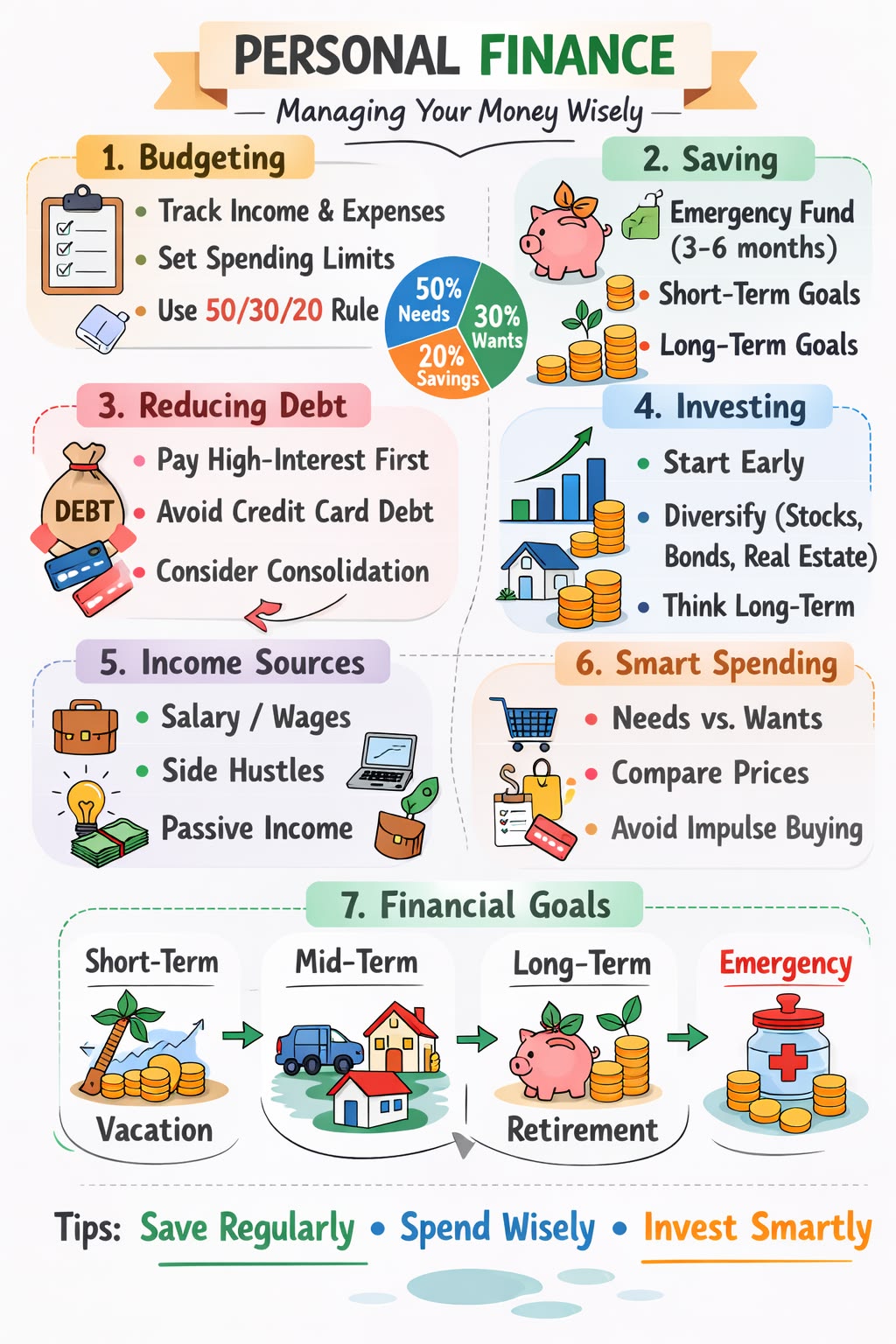
A Complete Guide to Managing Money, Saving, Investing, and Building Wealth
Meta Title: Personal Finance India: Complete Guide to Saving and Investing
Meta Description: Learn how to manage money with this complete Personal Finance India guide. Discover budgeting, saving, investing, insurance, tax planning, debt management, and wealth-building tips.
Focus Keyword: Personal Finance India
Suggested URL: /personal-finance-india-guide/
Introduction to Personal Finance India

Personal Finance India is becoming an important topic for students, working professionals, business owners, and families. Managing money is not only about earning a high salary. It is also about saving wisely, controlling expenses, investing regularly, avoiding unnecessary debt, and planning for future goals.
Many people earn a decent income but still struggle with money because they do not have a proper financial plan. They spend without tracking, use credit cards without discipline, take loans for lifestyle expenses, and delay investing. A strong personal finance India strategy can help people avoid these mistakes and create financial security.
Whether you earn ₹20,000 per month or ₹2 lakh per month, financial planning is necessary. The amount may be different, but the basic rules remain the same. You should know where your money goes, how much you save, how much debt you have, and how your investments are growing.
This guide explains the most important parts of personal finance in India in simple language.
What Is Personal Finance?
Personal finance means managing your own money. It includes your income, expenses, savings, investments, insurance, loans, taxes, and retirement planning.
In simple words, personal finance in India is about making smart decisions with money so that you can live comfortably today and remain financially secure in the future.
A good personal finance plan helps you:
- Control unnecessary spending
- Build an emergency fund
- Save for short-term goals
- Invest for long-term wealth
- Buy insurance for protection
- Reduce debt
- Plan for retirement
- Handle taxes efficiently
- Achieve financial independence
Personal Finance India is not only for rich people. It is for everyone who wants to improve their financial life.
Why Is Personal Finance Important in India?
India has a growing economy, rising salaries, increasing lifestyle expenses, and easy access to loans and credit cards. While these opportunities are useful, they can also create financial pressure if money is not managed properly.
For example, a person may buy a new phone on EMI, use a credit card for shopping, take a bike loan, and later struggle to pay monthly bills. This is why personal finance in India is important for young adults and families.
Here are some reasons why financial planning matters:
Rising Cost of Living
Rent, education, healthcare, food, transport, and lifestyle expenses are increasing in many Indian cities. Proper planning helps you manage these costs without depending on loans.
Medical Emergencies
Hospital bills can be expensive. A health insurance policy and emergency fund can protect your savings during difficult times.
Job Uncertainty
No job is completely secure. A sudden job loss, business slowdown, or salary delay can create stress. Savings and emergency funds provide support during such situations.
Future Goals
You may want to buy a house, buy a car, start a business, get married, travel, or support your children’s education. Personal Finance India helps you prepare for these goals.
Retirement Planning
Many people think retirement planning can wait until later. However, starting early makes it easier because investments get more time to grow.
Step 1: Understand Your Income and Expenses
The first rule of personal finance in India is to know your income and expenses.
Your income can include:
- Salary
- Freelancing income
- Business income
- Rental income
- Interest income
- Investment returns
- Side income
Your expenses can include:
- House rent
- Groceries
- Electricity bills
- Mobile recharge
- Internet bills
- Travel expenses
- Loan EMIs
- Credit card bills
- Shopping
- Entertainment
- Medical expenses
Many people do not know how much they spend every month. They only realize it when their bank balance becomes low. Tracking expenses helps you understand where money is going.
You can use a notebook, spreadsheet, mobile app, or budgeting app to track your money.
Step 2: Create a Monthly Budget
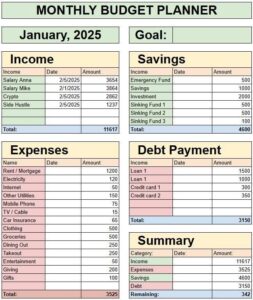
A budget is a plan for your money. It tells you how much you can spend, save, and invest every month.
One popular budgeting rule is the 50/30/20 rule:
- 50% for needs
- 30% for wants
- 20% for savings and investments
Needs include rent, groceries, bills, transport, and essential expenses. Wants include dining out, movies, shopping, subscriptions, and entertainment. Savings and investments include emergency funds, mutual funds, fixed deposits, and retirement investments.
For example, if your monthly salary is ₹50,000:
-
₹25,000 for needs
- ₹15,000 for wants
- ₹10,000 for savings and investments
This is only an example. You can change the percentage based on your income and responsibilities. The main purpose of personal finance in India is to spend less than you earn.
Step 3: Build an Emergency Fund
An emergency fund is money saved for unexpected situations. It can help during job loss, medical emergencies, urgent repairs, family emergencies, or sudden income loss.
Experts generally suggest saving at least three to six months of your monthly expenses. If your monthly expenses are ₹30,000, your emergency fund should ideally be between ₹90,000 and ₹180,000.
Keep emergency money in a safe and easily accessible place, such as:
- Savings account
- Sweep-in fixed deposit
- Liquid mutual fund
- Short-term fixed deposit
Do not invest your emergency fund in risky assets like stocks or crypto because you may need the money quickly.
Building an emergency fund is one of the strongest foundations of personal finance in India.
Step 4: Start Saving Before Spending
Many people follow this habit: earn money, spend money, and save whatever is left. Usually, very little is left at the end of the month.
A better habit is to save first and spend later. As soon as you receive your salary, transfer a fixed amount to your savings or investment account.
This is called “pay yourself first.”
For example, if you earn ₹40,000 per month, you can automatically invest ₹5,000 or ₹10,000 on salary day. Then manage the remaining amount for expenses.
Automatic savings make personal finance in India easier because you do not have to make the same decision every month.
Step 5: Understand the Difference Between Saving and Investing
Saving and investing are not the same.
Saving means keeping money safe for short-term needs. Examples include savings accounts, fixed deposits, recurring deposits, and emergency funds.
Investing means putting money into assets that may grow over time. Examples include mutual funds, stocks, the Public Provident Fund, the National Pension System, gold, and real estate.
Savings are useful for short-term goals. Investments are useful for long-term goals.
For example:
- Emergency fund: savings
- Buying a phone next year: savings
- Buying a house after 10 years: investment
- Retirement after 25 years: investment
- Children’s education after 15 years: investment
A smart personal finance plan in India includes both savings and investments.
Step 6: Set Financial Goals
Financial goals give direction to your money. Without goals, you may spend randomly and delay important plans.
Your goals can be divided into three categories:
Short-Term Goals
These are goals you want to achieve within one to three years.
Examples:
- Buy a smartphone
- Build an emergency fund
- Take a vacation
- Pay off a credit card bill
- Buy a bike
- Start a small business
Medium-Term Goals
These are goals you want to achieve within three to seven years.
Examples:
- Buy a car
- Save for marriage
- Make a house down payment
- Start a professional course
- Build a business fund
Long-Term Goals
These are goals that may take more than seven years.
Examples:
- Buy a house
- Children’s education
- Retirement
- Financial independence
- Wealth creation
Personal Finance India becomes more effective when every investment has a clear purpose.
Step 7: Invest in Mutual Funds
Mutual funds are popular investment options in India because they allow people to invest in a diversified portfolio without choosing individual stocks.
A mutual fund collects money from many investors and invests it in shares, bonds, or other assets. It is managed by professional fund managers.
For beginners, Systematic Investment Plans, also known as SIPs, can be useful. A SIP allows you to invest a fixed amount every month.
For example, you can start a SIP with ₹500, ₹1,000, ₹5,000, or more depending on your budget.
Benefits of SIP investing include:
- Start with a small amount
- Invest regularly
- Build discipline
- Benefit from long-term compounding
- Reduce the pressure of timing the market
- Suitable for long-term goals
Equity mutual funds may offer better growth potential over the long term, but they also carry market risk. Debt funds and hybrid funds may be suitable for people with different risk levels.
Before investing, understand the fund category, risk level, expense ratio, investment horizon, and your financial goal.
Step 8: Learn About Compounding
Compounding is one of the most powerful concepts in personal finance in India. It means earning returns not only on your original investment but also on the returns generated over time.
For example, if you invest ₹5,000 every month for many years, your money can grow significantly because returns keep getting added to the investment.
The biggest advantage of compounding is time. Starting early gives your money more time to grow.
A person who starts investing at age 25 may build more wealth than someone who starts at age 35, even if the second person invests a larger amount later.
This is why delaying investment can be costly. Start with a small amount if needed, but start early and stay consistent.
Step 9: Use Insurance for Financial Protection
Insurance is not an investment. It is protection against financial loss.
Two important types of insurance are health insurance and term life insurance.
Health Insurance
Health insurance helps cover medical expenses. Hospital treatment can be expensive, especially in private hospitals. A good health insurance policy can protect your emergency savings.
Even if your employer provides health insurance, it is wise to understand the coverage. Company insurance may stop if you change jobs.
Term Life Insurance
Term insurance provides financial support to your family if something happens to the earning member. It is especially important for people who have dependents, loans, children, or family responsibilities.
Avoid buying insurance only because someone says it gives returns. First understand the purpose of the policy. Personal Finance India focuses on protection first and investment separately.
Step 10: Manage Credit Cards Carefully
Credit cards can be useful when used responsibly. They offer convenience, rewards, cashback, and better payment flexibility. However, they can become dangerous if bills are not paid on time.
Credit card interest rates are usually very high. If you pay only the minimum due, the remaining amount can grow quickly because of interest charges.
Follow these rules:
- Spend only what you can repay
- Pay the full bill before the due date
- Avoid using cards for unnecessary shopping
- Do not take cash withdrawals from credit cards
- Keep credit utilization low
- Check your monthly statement
- Avoid having too many credit cards
Good credit card habits are an important part of personal finance in India.
Step 11: Reduce and Avoid Bad Debt
Not all debt is bad. A home loan or education loan may help you build assets or improve your career. However, high-interest debt for unnecessary spending can create financial problems.
Bad debt may include:
- Credit card debt
- Personal loans for shopping
- Buy-now-pay-later debt
- High-interest informal loans
- Loans for luxury purchases
If you have multiple loans, focus on paying high-interest debt first. This method can reduce the total interest burden.
You can also use the debt snowball method, where you pay off the smallest loan first to build motivation. Choose the method that helps you stay consistent.
Avoid taking a new loan just to pay an old loan unless you fully understand the interest rate and repayment terms.
Step 12: Plan Taxes Smartly
Tax planning is an important part of personal finance in India. Many people start looking for tax-saving options only at the end of the financial year. This can lead to rushed decisions.
Instead, plan tax-saving investments from the beginning of the year.
Common tax-saving options may include:
- Employee Provident Fund
- Public Provident Fund
- Equity-Linked Savings Scheme
- National Pension System
- Life insurance premiums
- Health insurance premiums
- Home loan benefits
Tax rules can change, so it is important to check current rules or consult a qualified tax professional before making decisions.
Do not invest only to save tax. First check whether the investment matches your goals, risk level, and lock-in period.
Step 13: Plan for Retirement Early
Retirement planning means creating enough wealth so that you can maintain your lifestyle after you stop working.
Many people depend only on salary income. But after retirement, salary stops while expenses continue. Healthcare costs may also increase with age.
A retirement plan may include:
- Employee Provident Fund
- Public Provident Fund
- National Pension System
- Mutual fund SIPs
- Fixed deposits
- Rental income
- Other long-term investments
The earlier you start, the smaller your monthly investment may need to be. Personal Finance India encourages people to start retirement planning as soon as they begin earning.
Step 14: Avoid Lifestyle Inflation
Lifestyle inflation happens when your spending increases every time your income increases.
For example, after getting a salary hike, you may upgrade your phone, buy expensive clothes, eat outside more often, take bigger loans, or increase credit card spending.
It is good to enjoy your money, but spending every salary hike can delay wealth creation.
A better approach is to increase your savings and investments whenever your income increases.
For example, if your salary increases by ₹10,000, you can invest ₹5,000 more every month and use the remaining amount for lifestyle improvements.
This simple habit can improve your personal finance India journey significantly.
Step 15: Review Your Financial Plan Regularly
Your financial plan should not remain the same forever. Your income, expenses, responsibilities, goals, and risk level may change over time.
Review your finances at least once or twice a year.
Check these points:
- Has your income increased?
- Are your expenses under control?
- Is your emergency fund enough?
- Are your investments performing according to your goals?
- Do you have enough insurance coverage?
- Are you paying unnecessary fees or charges?
- Have your financial goals changed?
- Are you carrying high-interest debt?
Regular review helps you stay on track and make better decisions.
Common Personal Finance Mistakes to Avoid
Many people make mistakes because they do not learn basic money management. Here are some common mistakes:
- Not tracking expenses
- Spending more than income
- Delaying investments
- Having no emergency fund
- Using credit cards carelessly
- Taking unnecessary loans
- Buying insurance only for returns
- Investing without understanding risk
- Ignoring retirement planning
- Investing only to save tax
- Following random tips from social media
- Not reviewing financial goals
Avoiding these mistakes can make personal finance in India simpler and more successful.
Final Thoughts
Personal Finance India is not about becoming rich overnight. It is about building smart habits with money over time.
Start by tracking your expenses, creating a budget, building an emergency fund, and saving regularly. Then invest according to your goals and risk level. Protect yourself with health insurance and term insurance, avoid high-interest debt, and plan for retirement early.
You do not need a huge income to begin. Even a small monthly investment can make a difference when you stay consistent for many years.
The best time to start managing your money was when you earned your first income. The next best time is today. With discipline, patience, and the right Personal Finance India plan, you can create a more secure and financially independent future.
If you want, I can also create SEO tags, FAQ schema questions, a short meta description, and 20 related keywords for this article.